
The State announced plans to develop the nation’s first floating offshore wind research array in the Gulf of Maine in November 2020. With only a few floating offshore wind arrays operating in the world, the research array is needed to conduct important technological, operational, and scientific research to inform future floating offshore wind projects in the Gulf of Maine.
The research array will be 15.2-square-miles in size, located in Federal waters, and will host up to 12 turbines on innovative floating platform technology developed by the University of Maine. The array will provide critical firsthand experience with a multi-turbine array, which will unlock greater understanding of how future floating wind farms will integrate with the marine environment and existing ocean uses.
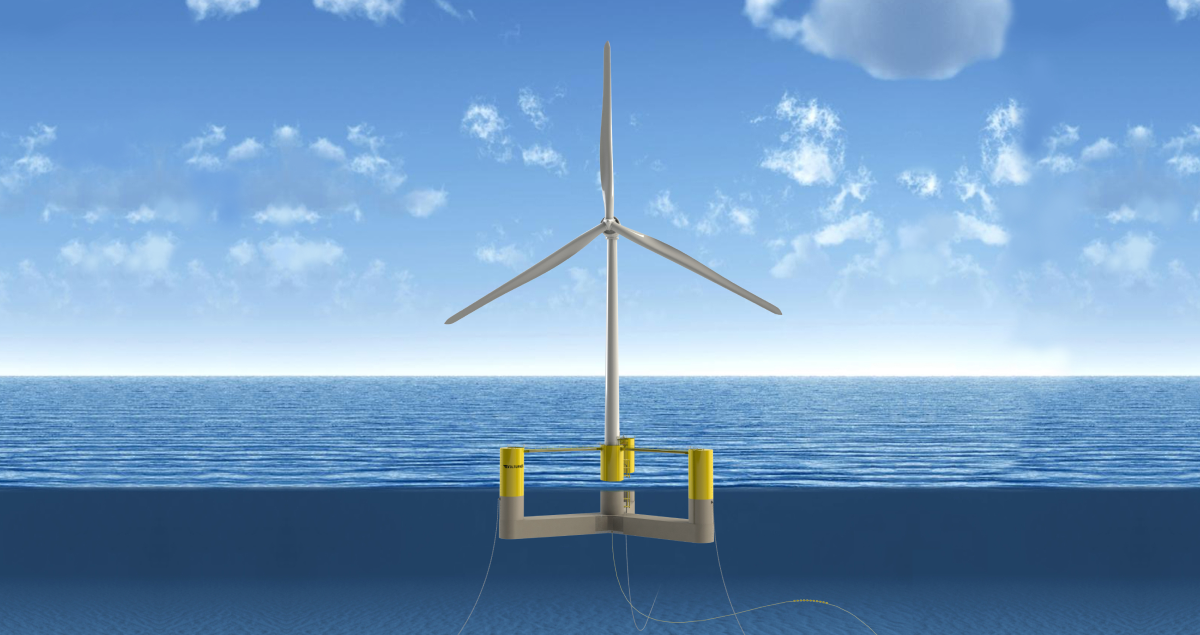
Maine's research array will facilitate groundbreaking research in floating offshore wind by identifying opportunities and challenges to existing uses, developing methods to avoid and minimize impacts to the ecosystem, and identifying ways to lower the cost of floating offshore wind energy.
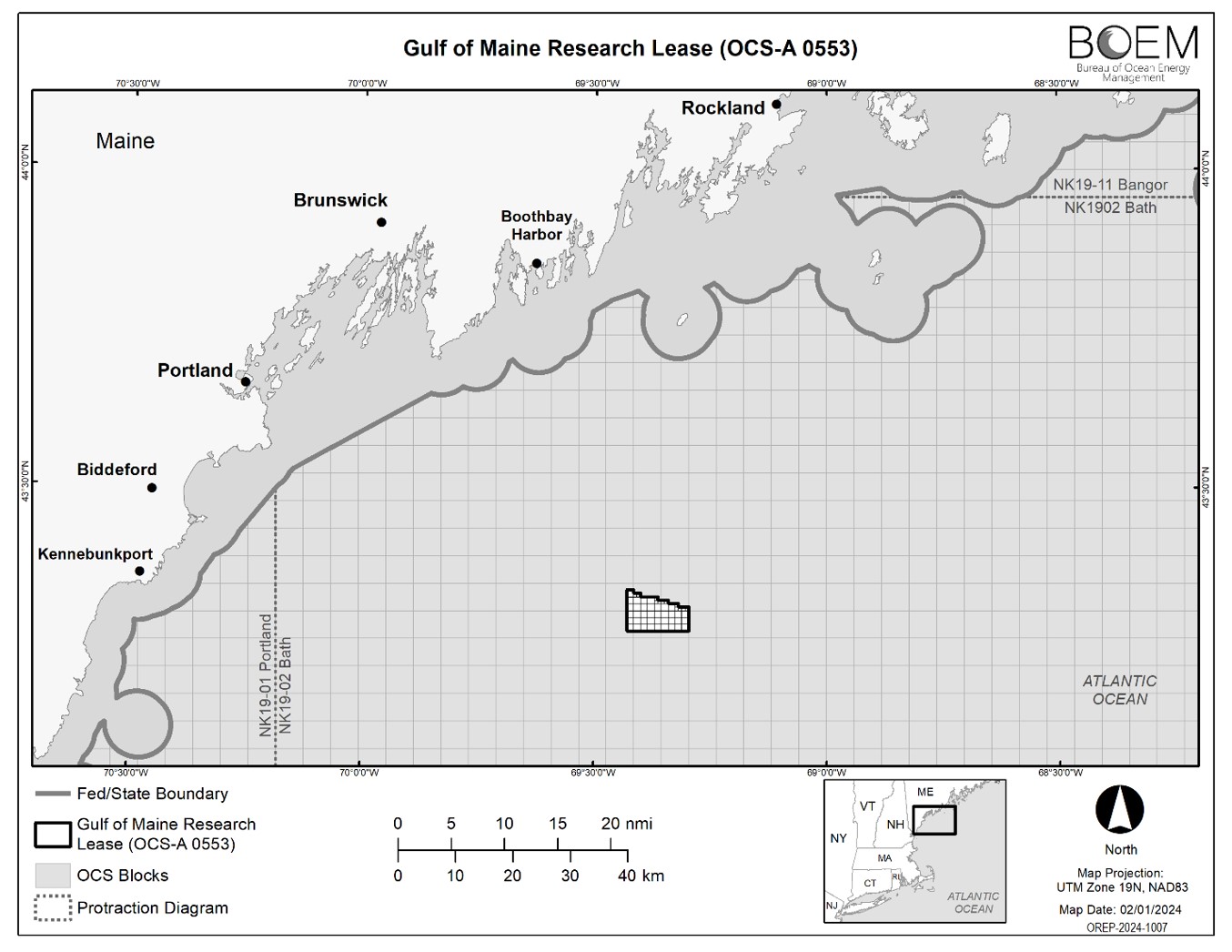
Map of the research array lease BOEM has offered to Maine as of May 24, 2024. See FAQs below for more information on the lease location.
A research lease is still subject to the same rigorous review and approval process that commercial leases are which will include a Site Assessment Plan, a Construction and Operations Plan, and a National Environmental Policy Act Environmental Review. This process involves multiple opportunities for public review and comment and will likely take at least four years.